Click and collect across UAE


Waterproofing in the UAE: Protecting Buildings Against Heat, Humidity and Water Damage
Waterproofing may remain invisible once a building is completed, but its performance can have a...


For decades, the UAE’s construction industry has been powered by a highly connected global supply chain. Materials, technologies and products sourced from around the world have helped build everything from residential communities and commercial developments to industrial facilities and major infrastructure.
That global connectivity remains a strength.
But in 2026, another important shift is accelerating alongside it: the growing strategic importance of local manufacturing and local sourcing.
Across the UAE, initiatives supporting domestic industrial capacity are encouraging more products to be manufactured within the country. At the same time, recent disruption to international supply chains has highlighted the value of having critical materials available closer to where they are needed.
For the construction industry, “Made in the UAE” is therefore becoming about more than country of origin.
It is increasingly about resilience, responsiveness and long-term industrial capability.
Several forces are driving the shift.
The UAE continues to expand its industrial base as part of its broader economic diversification strategy. Initiatives such as Make it in the Emirates are creating opportunities for manufacturers to establish and expand production capabilities within the country.
Major organisations are also placing greater emphasis on localisation and In-Country Value.
For contractors and developers, meanwhile, utilizing materials manufactured or stocked closer to the project ensures greater reliability and significantly reduces exposure to international logistics risks.
The result is an increasingly connected ecosystem involving local manufacturing, local distribution and global expertise.
No.
The UAE construction market is diverse, and imported products will continue to play an important role. Many specialist products, technologies and established international brands form an essential part of project specifications.
The opportunity is not to choose between “local” and “global.”
It is to create a stronger balance between the two.
International sourcing provides access to global technologies and product diversity. Local manufacturing can add shorter supply chains, responsiveness and domestic production capacity.
Together, they can create a stronger construction supply ecosystem.
One of the clearest advantages is proximity.
An imported product may pass through several stages before reaching a UAE construction site: overseas production, port handling, international shipping, customs clearance, warehousing and domestic distribution.
Each additional stage introduces a potential variable.
Local production cannot eliminate every supply-chain risk—raw materials themselves may still be imported—but it can shorten parts of the chain.
That can provide contractors with:
For high-volume construction materials, these advantages can become particularly significant.
Potentially, yes.
Construction projects rarely proceed exactly according to the original procurement plan.
Quantities change. Site conditions evolve. Additional materials are required. A subcontractor may need stock earlier than expected.
When materials are manufactured, stocked or distributed within the UAE, procurement teams may be able to respond more quickly to these changes.
The value is not simply faster delivery.
It is greater flexibility during project execution.
And in a sector where time has a direct commercial value, flexibility matters.
Local sourcing should never mean compromising on specification or quality.
Instead, the growth of sophisticated UAE manufacturing can give contractors additional options that meet required technical standards while being produced closer to the end market.
Proximity can also make communication between manufacturers, distributors and customers easier.
For large projects, this can support clearer technical coordination, product availability discussions and planning around future demand.
Ultimately, sourcing decisions should continue to be based on the correct specification, required certifications, quality, commercial viability and project needs—regardless of where a product is manufactured.
The impact extends well beyond individual construction projects.
Every new manufacturing capability contributes to a broader industrial ecosystem involving engineering, logistics, warehousing, transportation, technical services and skilled employment.
This creates a multiplier effect.
Instead of value being generated only when a finished product is sold, more stages of the value chain can take place within the UAE.
Over time, stronger domestic industrial capability can also help the country develop deeper technical expertise and greater economic resilience.
Manufacturing a product within the UAE does not automatically mean it is available exactly where and when a contractor needs it.
The link between manufacturing and the construction site remains distribution.
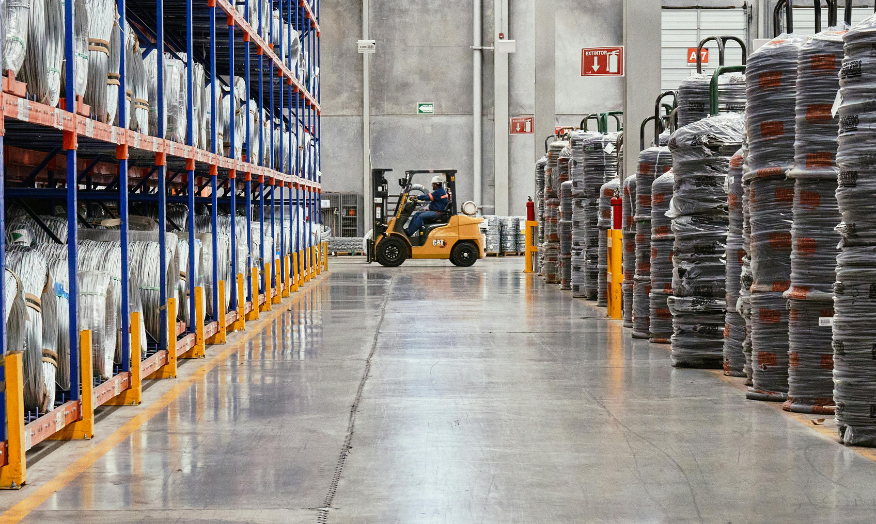
Warehouses, showrooms, transportation fleets and inventory planning convert production capacity into actual project availability.
This is why distributors remain an essential part of the localisation story.
A strong construction supply ecosystem requires:
Manufacturing → Inventory → Distribution → Project Site
Each part strengthens the next.
For established building material companies, the rise of local manufacturing creates an opportunity to evolve.
The distributor of the future will not simply connect overseas manufacturers with UAE customers.
It can connect global brands, UAE manufacturers, contractors, developers and project sites through one integrated supply network.
That model gives procurement teams greater flexibility. Depending on specifications and project requirements, customers can access internationally sourced products alongside locally available and locally manufactured alternatives.
For Al Jessour, this evolution is particularly meaningful.
Since 1996, Al Jessour Building Materials has grown alongside the UAE’s construction industry, building an extensive distribution footprint across the country.
The Group’s journey is now expanding beyond distribution.
In February 2026, Al Jessour Steel Industries (AJSI) entered manufacturing in the UAE, marking an important new chapter for the business. With its first manufacturing facility operational and another factory underway, the move reflects a broader ambition to contribute not only to the distribution of construction materials, but also to the UAE’s growing industrial ecosystem.
This progression—from trading and distribution towards manufacturing—mirrors a wider change taking place across the country.
It also brings different parts of the construction supply chain closer together: manufacturing capability, established warehousing, market knowledge and distribution reach.
The UAE construction industry’s global connections will remain fundamental to its success.
But the future is increasingly about strengthening what sits alongside those connections.
More domestic manufacturing. Stronger local inventories. More responsive distribution. Greater industrial capability.
For contractors, local sourcing can provide another layer of resilience and flexibility.
For manufacturers and distributors, it creates opportunities to build capabilities closer to their customers.
And for the UAE, it contributes to a larger ambition: developing an economy that does not only build world-class projects, but increasingly manufactures the materials that help build them.
Local sourcing means procuring building materials, products or components manufactured or readily available within the domestic market rather than relying entirely on overseas supply.
Local manufacturing supports economic diversification, industrial capability, supply-chain resilience, skilled employment and greater value creation within the UAE.
No. Product selection should always depend on specifications, standards, certifications, quality and project requirements. Local manufacturing provides additional sourcing options rather than automatically replacing international products.
It can. Materials manufactured or stocked within the UAE may have shorter replenishment cycles and less exposure to certain international shipping delays, although actual lead times depend on product and availability.
In-Country Value, or ICV, is an approach that encourages organisations to increase the economic value generated within the UAE through areas such as local procurement, manufacturing, investment and employment.
Al Jessour Steel Industries (AJSI) represents the Al Jessour Group’s expansion into UAE manufacturing. Manufacturing operations began in February 2026, with one factory operational and another facility underway.
Yes. The UAE construction sector will continue to benefit from global brands and international supply networks. The emerging model is likely to combine global sourcing with stronger UAE manufacturing and local distribution.